
Read Your Mind

I initially heard about Oz from Diary of a CEO. There were some really interesting topics he was covering, and I noticed he had a book coming out. So, I checked it out. I had no idea he was not only a mentalist but an ultra marathon runner. So, this book was an instant favorite for me. Here’s a few notes on what I liked:
- To be the most interesting man in the room, you must be interested in everyone in the room on their needs.
- Practice how you can make everyone’s day just a little bit brighter. This comes with practice on how you use your words. Be genuine. It just gets everyone in your corner.
- Everyone plays the hero in their own story. We’re just supporting cast. It’s all about what you have to offer them. e.g., Don’t ask Lebron for a selfie with nothing to offer. Create a relationship. A moment. A connection. Then say “Let’s remember tonight and take a picture together.”
- Asking for a selfie to an athlete… That’s something something a fan would do. Don’t go down that route. You need to rather position yourself as an equal. Share the moment as equal people.
- Always build a backup plan. Think of all objections beforehand.
- Find ways to fail in sales. Continue to fail, but fail gracefully. Keep your attitude the same. Tomorrow you won’t even recall your failure. This builds character and thicker skin. The most innovative people fail constantly.
- In meeting with people and sales, never give the easy out… “Who wants to see some magic” – No. “It must be your lucky day. Management hired me to give you a special treat. I’d like to spend some time with you to make this night a bit more memorable. Alright…”
- Capartmentalize failure. It’s not you as a human being they don’t like. It’s the trick or sale itself. Take a bucket of fresh water. If you let the salt touch the entire bucket, it becomes saltwater. But, if you divide it, it only affects that section, not your entire being.
- To be successful, you need to succeed more than you fail. However, if you are successful all the time (and don’t fail), you will never be successful. Roger Federer won only 80% of his matches. Baseball players only see success 3 out of 10x. Failure is part of success.
- Be comfortable with being uncomfortable to embrace that feeling. It’s the growth mindset.
- Remember during a pitch. Go for the gold. Go for the heart strings that move people.
- Understand timing. Wait for the right moment. Tell the story.
- Goal are reverse engineering the outcomes that you want.
- Listen. Repeat. Reply. That’s how you build memory.
- Build rapport. It’s the human touch with a little bit of additional effort to build that rapport.
Fax build repoire report
- Information is delivered as a story. It has different life.
Never Split the Difference
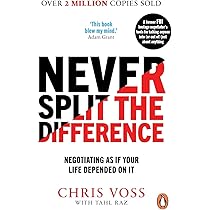 I’ve really liked this book so far. I’ve tried some of these tactics, and it’s been great! Mainly just to either get to the heart of the matter or find more information:
- Embrace Tactical Empathy: Understand your counterpart’s perspective and feelings. It’s not about being nice; it’s about gaining leverage by knowing their world.
- Master Active Listening: Truly hear what the other side is saying (and not saying). Use techniques like mirroring, paraphrasing, and labeling emotions to show you understand.
- It’s Okay to Say “No”: Don’t aim for “yes” immediately. Getting the other party to say “no” can make them feel safe and in control, opening the door for more productive conversation.
- Strive for “That’s Right”: This is the ultimate validation in a negotiation. It signifies that they feel understood. Use summaries to get them to agree with your understanding of their situation.
- Label Their Fears: Identify and verbalize the negative emotions your counterpart might be feeling. This diffuses their power and shows empathy (“It sounds like you’re worried about…”).
- Mirroring for Rapport: Repeat the last few words (or the critical one to three words) of what your counterpart says. This makes them feel heard and encourages them to elaborate.
- Use Calibrated Questions: Ask open-ended “how” and “what” questions to get the other side thinking and revealing information without feeling interrogated.
- Beware of “Yes”: A “yes” without understanding or commitment is worthless. Focus on uncovering the “why” behind their responses.
- Don’t Split the Difference: Compromise often leads to suboptimal outcomes. Aim for creative solutions that address both parties’ underlying needs, rather than just meeting in the middle.
- Your wife wants you to wear black shoes. You want to wear brown. The win win is o wear one black and one brown. Nobody wins.
- Uncover Black Swans: These are the unknown unknowns – the crucial pieces of information that can change everything. Effective negotiation involves uncovering these hidden factors.
- Don’t just be a wet blanket – Don’t just give up in a negotiation. Quit that. Negotiate back every single time. It’s important part of life.
- Conflict is a route to building.
- Always use anchoring to get what you want plus some.
The Speed of Trust
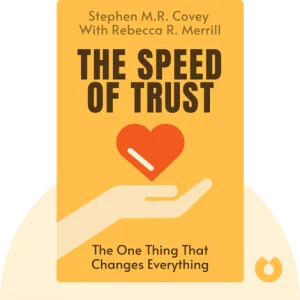 Cheers to kick off the 2025 with an audiobook from leadership. This was an hour listen, and here’s what we learend.
- Trust is a learnable skill: It’s not just a personality trait; we can actively improve our ability to both give and receive trust.
- High trust speeds things up and lowers costs: When trust is high, communication is faster, collaboration is easier, and less time is spent on bureaucracy and verification. Conversely, low trust slows things down and increases costs.
- There are “Five Waves of Trust”: These encompass self-trust (credibility), relationship trust (behavior), organizational trust (alignment), market trust (reputation), and societal trust (contribution). Building trust in each of these areas is crucial.
- Credibility is the foundation of self-trust: This is built on four cores: integrity, intent, capabilities, and results. Being authentic and delivering on your promises are essential.
- Behavior impacts relationship trust: There are “13 High-Trust Behaviors” that foster trust in interpersonal interactions, such as talking straight, demonstrating respect, creating transparency, and righting wrongs.
- Trust is a strategic imperative: It’s not just a “nice-to-have” but a fundamental driver of performance, innovation, and competitive advantage in today’s world.